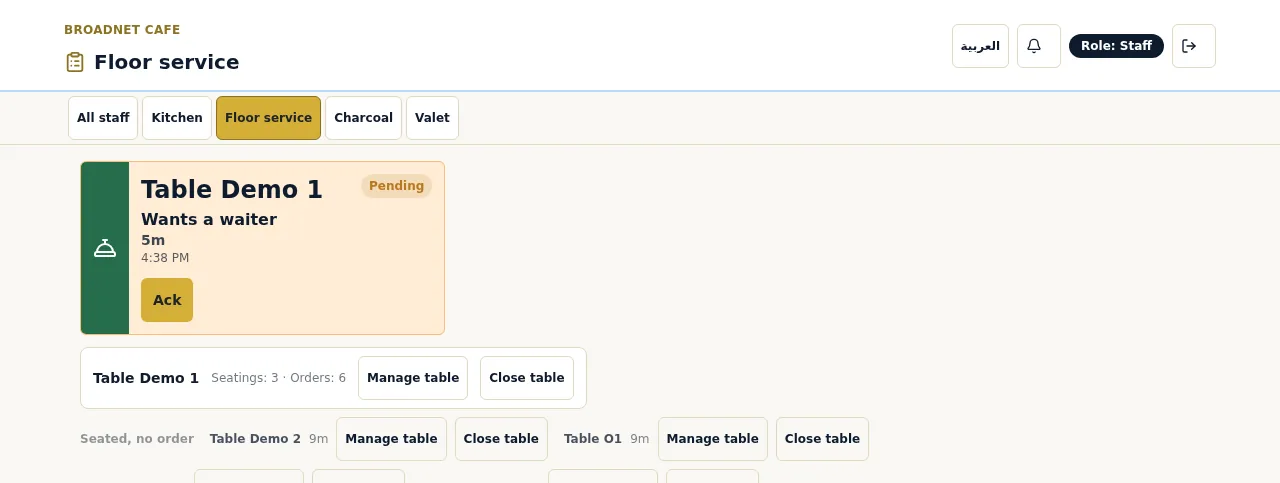
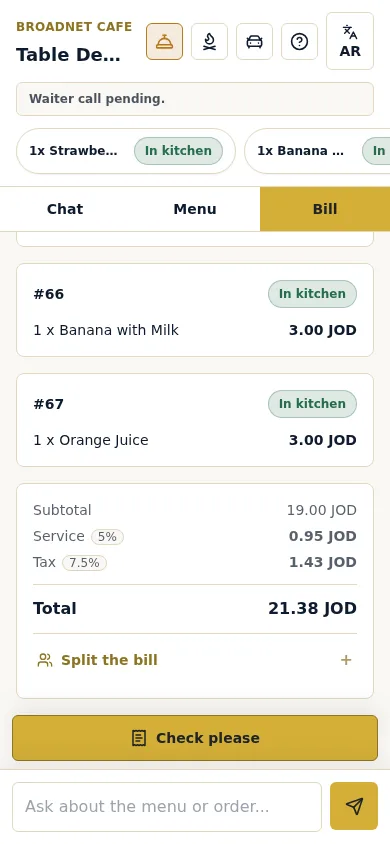
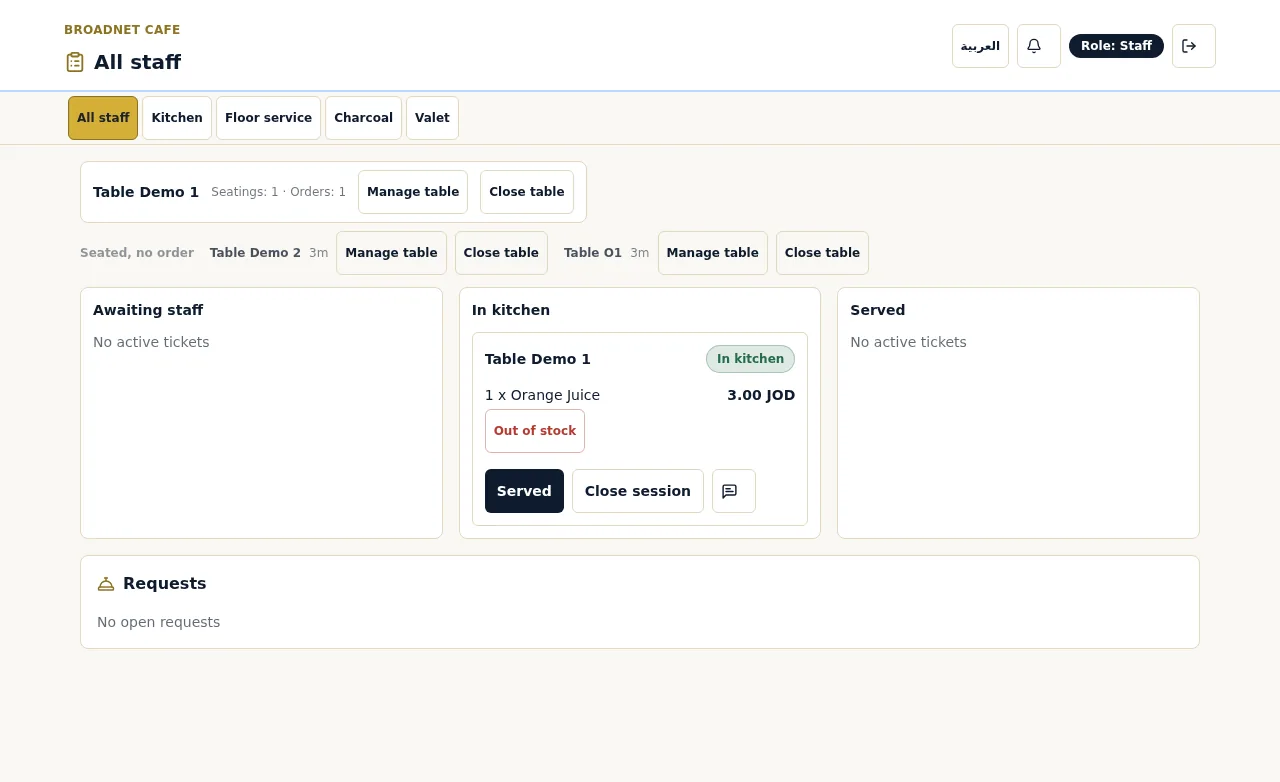
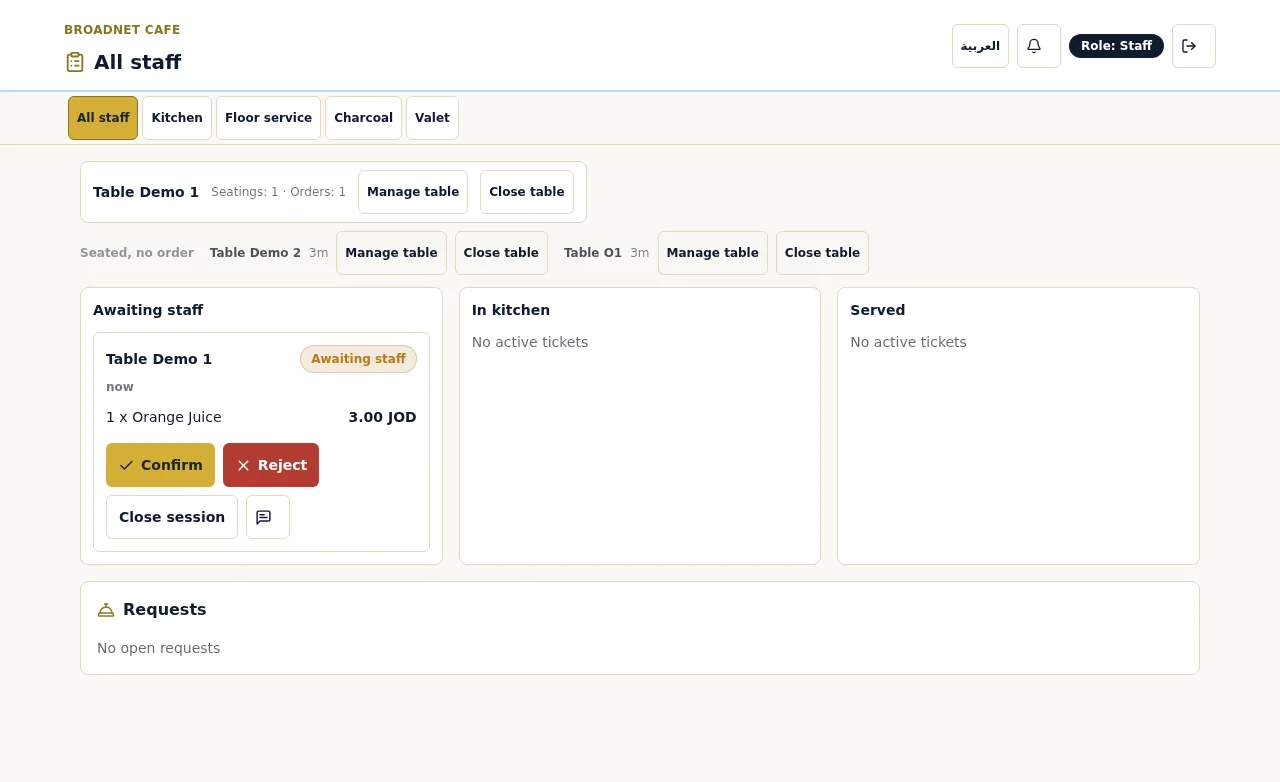
Table ordering changes who does what on a busy night. Guests send orders from their phones, someone confirms the first order at each table, the kitchen works from a screen, and waiter calls and check requests arrive as alerts instead of raised hands.
Not for every guest on their own. Guests with low vision, screen-reader users, many older guests and anyone without a working phone can be shut out by a QR-only menu. Keep the printed menu on offer, make the table card large and high-contrast, test the menu with a screen reader, and make sure staff take orders the usual way.
A table button works for every guest with no phone; a call from the phone tells staff what the guest wants. What each shows, needs and does when nobody answers.
It depends where you are. The FDA Food Code asks for written allergen notice, and California chains with 20+ locations must list allergens from July 2026.
A step-by-step allergy protocol for QR ordering: what the guest types, where the note shows, who checks it. The chat never says a dish is safe; staff decide.
There's no verified industry standard. Set house targets for the greeting, first order and check, measure them, and cut the waits caused by busy servers.
There's no verified standard. Section size depends on service style, party size, kitchen distance and support staff. A simple formula and a worked example.
At iftar, most tables want to eat at the same moment. Prepare before sunset, split the jobs, simplify the menu, and keep the check fast as guests leave.
Wrong orders start at a handful of hand-offs: mishearing, missing choices, re-keying, wrong table, bad notes. A map of each, the fix and a two-week error log.
Cut the waits guests didn't choose (for a server, the check, the card machine), not the meal. The formula, a worked 20-table example and what research found.
Write down what your servers carry in their heads: clear dish names, required choices, ingredients, allergens, prices and photos. A checklist and an example.
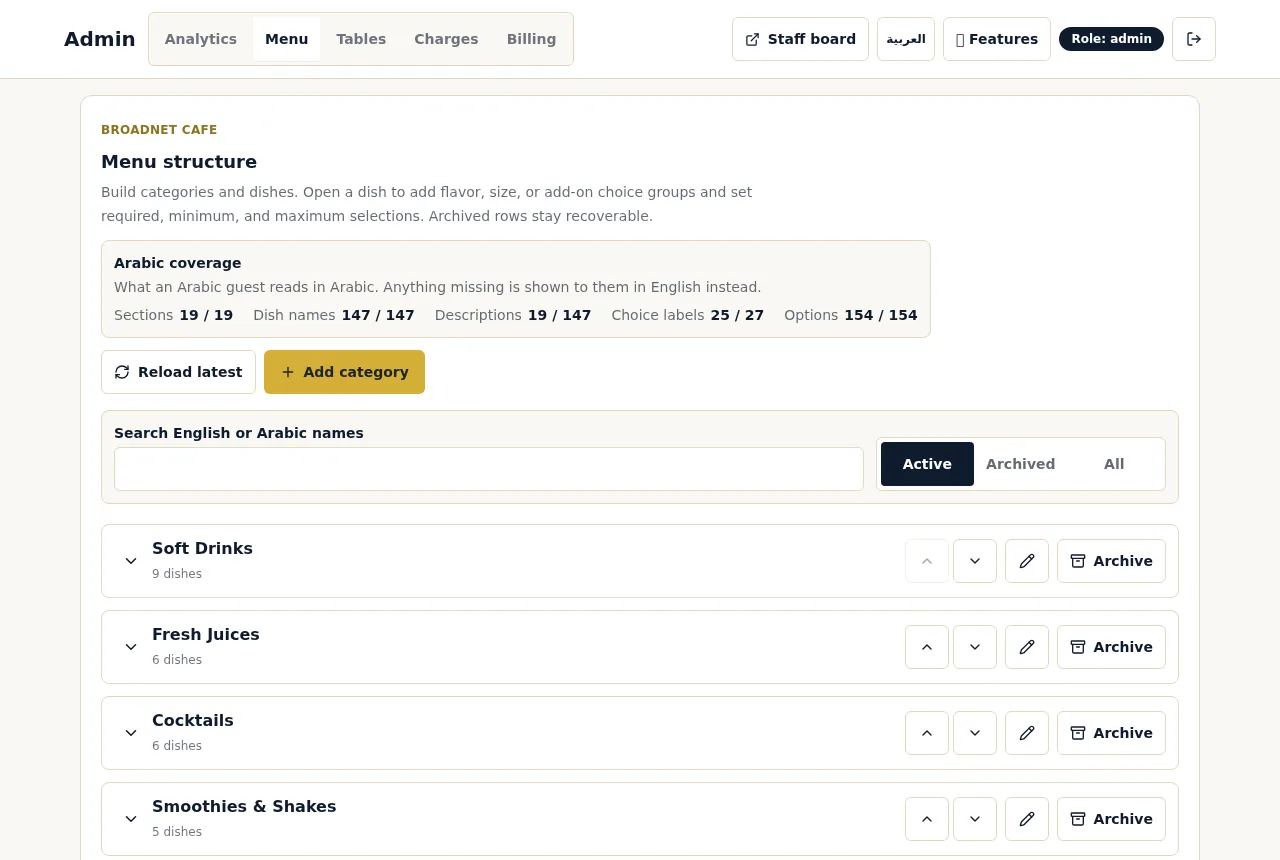
A day-by-day plan from first call to first service: menu, menu check, bill charges, QR cards, staff roles, a test night and a soft launch, plus what slows it.
Three ways to split one restaurant bill, worked out on a four-person table with tax and a service charge, and where payment happens when guests split on phones.
A 30-minute pre-shift script for teaching servers and cooks a new QR ordering board: who confirms, what the colours mean, the exceptions and the allergy rule.
Suggest, don't push: what research says upselling and tabletop ordering really add, the moments and phrases that help guests, and what an AI waiter should do.
A printer gives cooks a ticket they can hold; a kitchen screen shows timing and status. How to choose for one station or several, and where WaiterPilot fits.
Sort dishes into stars, plowhorses, puzzles and dogs by popularity and margin, worked on an eight-dish menu, plus an input most guides miss: guest questions.
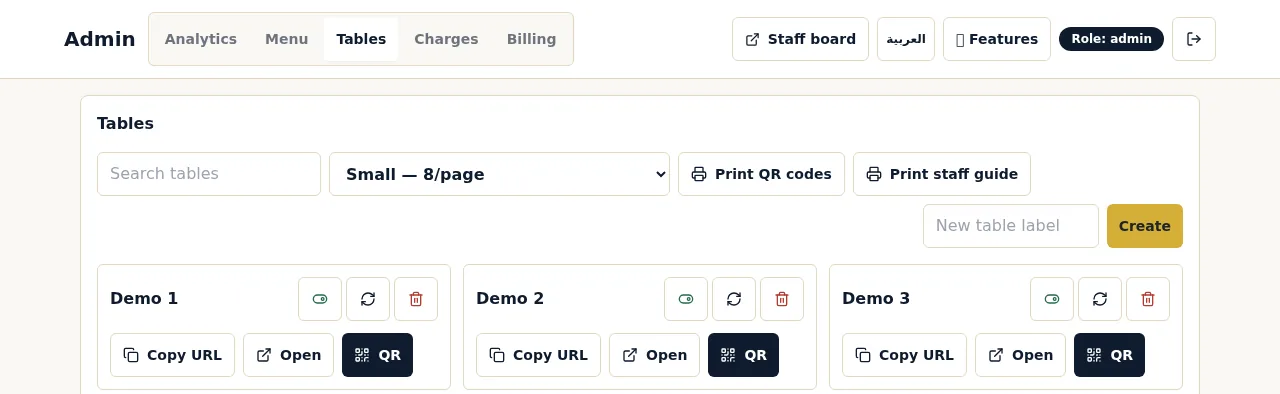
One code per table, placed where a seated guest sees it, with plain wording, a printed menu nearby, and a routine for cleaning, checking and replacing cards.
How to plan a Ramadan menu: a set iftar the kitchen can prepare before sunset, a lighter suhoor menu, pricing, prep timing, staff and Arabic dish names.
Nine tasks that eat server time, from re-explaining the menu to fetching the check, and what can take each one: a tool, a habit or a person. With 2026 data.
What 86 means in a restaurant, and the exact steps when a dish runs out with QR ordering: before anyone orders it, while an order waits, and once it's cooking.
What to do on the board when every table orders in the same ten minutes: who confirms, kitchen pacing, sold-out dishes, waiter calls, checks and closing.
Slow service is usually one or two gaps, not the whole meal. Time nine points from seat to check, find the longest gap and fix it first, with causes and fixes.
Ring QR orders into the till at one fixed moment, match each table's live bill to its till ticket before payment, then close with a 10-step nightly checklist.