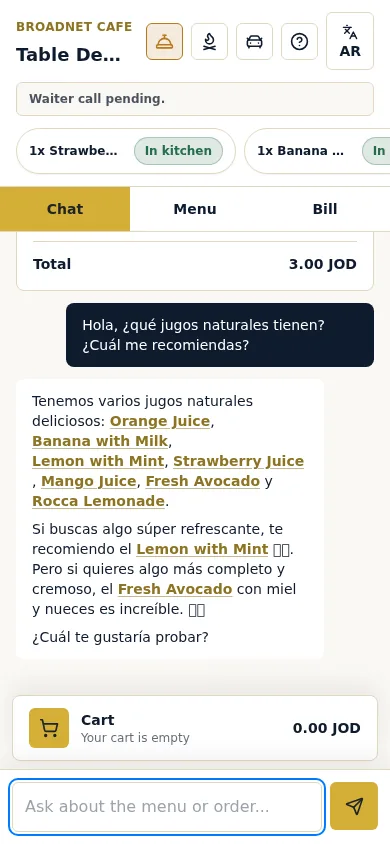
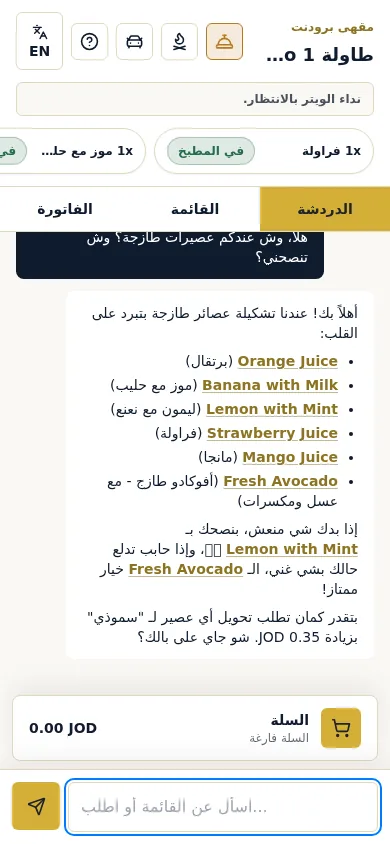
A guest who cannot read the menu orders less confidently, asks fewer questions and waits longer for help. These guides compare the ways restaurants close that gap, from printed translations to a chat that answers in the language the guest writes in, and say exactly which languages have been tested.
AI menu translation is usually fine for plain dishes and least reliable for local, figurative or culture-specific dish names. One 2025 study counted 135 errors in 118 AI translations of Lithuanian dishes, against 101 in 154 by human translators. Neither is error-free, so check every translated menu with a native reader before guests see it.
Translate or transliterate dish names, set Arabic right to left, choose Modern Standard Arabic or a dialect, show prices clearly, and leave halal to staff.
Halal and alcohol questions, Arabic dish names, which Arabic to use, notes your kitchen can't read, and a staff phrase card. Practical steps for any restaurant.
About one in eight US residents speaks Spanish at home, as does one in five restaurant workers. How to serve both, from the menu to the kitchen ticket.
Printed translations, translated QR menus, photos, staff and chat each fail in different places. Cost, upkeep and what happens when a guest asks a question.
Twelve steps for serving guests who don't speak your language: menu, photos, allergens, prices, tipping, waiter calls and bills, plus an example order.